Notes For Doctors |
Notes For Everyone
Notes For Doctors
The following information is a handout I distribute when I speak to pediatricians at Grand Rounds at various hospitals in the San Francisco Bay Area. I also hand out the information provided at the end of the Notes to Adoptive Parents. I hope these hints will be helpful to health professionals, as well as to adoptive parents.
- An adoptive family is different from a biological family.
- An infant knows her own mother at birth
through her senses: smell, voice, heartbeat, resonance, skin, etc.
Adoptive mother doesn’t pass the sensory test. - The child comes into the family traumatized by the separation from the mother.
- No matter what we call it (relinquishment, surrender), the child feels abandoned.
- The natural order of things is interrupted: may affect child’s understanding of cause and effect.
- Infant cannot make sense or integrate what has happened to him: world unsafe … chaos, confusion.
- The child is grieving. Mother needs to notice signs: seems sad, depressed, daydreams (dissociation).
- Fears another abandonment: anxious, hypervigilant. clingy.
- Somatic responses to anxiety may include: irritability, gastrointestinal problems, projectile vomiting,
asthma, rashes, sleep disturbance, etc. Often an elevation in pulse rate, blood pressure. - Affect: rage, sadness, fear, numbness, dissociation, constriction, depersonalization.
- Adoptive mother cannot mirror the child as birthmother could have: no genetic markers.
- Bonding with adoptive mother will be difficult: fear of another abandonment. Anxious attachment (clinging) is not same as bonding. Bonding is enhanced by a mother’s understanding, acknowledging, and validating her child’s feelings (rather than discounting, defending against, or giving assurances).
- Lack of genetic markers makes the child feel as if she doesn’t fit, doesn’t belong. Child has to figure out
how to be in the family. Hypervigilant. Tries to adapt. - As child begins to adapt, he forms a false self. Begins to lose authentic self. Becomes a “chameleon.”
- Child copes with pain of loss in one of two ways: compliance, acquiescence, and withdrawal, or aggression,
provocation, and acting out. If two adoptees in family, there is usually one of each. Behavioral methods of
coping have nothing to do with the child’s basic personality. May trade off. - Behavior may be difficult, but it is not abnormal. Normal way of responding to an abnormal event: separation
from biological mother. - Although child with each coping style needs help, parents of the acting-out child are usually the only ones who seek it.
- Family dynamics will be affected. (Families with biological children need to consider this before deciding to adopt).
- Most of the child’s difficulty will be with the adoptive mother: potential abandoner.
- Many parents, not understanding the issues, blame themselves. Feel isolated.
- Children may have difficulties around birthdays (separation day): fussy, sad, angry, ill. Celebrate early.
- Symptoms will fit criteria for PTSD, but more complex(see J Herman, B. van der Kolk).
- Because of trauma many adoptees have difficulty in school due to problems with attention, distractibility, and stimulus discrimination.
- When trauma occurs early, child, in trying to make sense of it, creates a set of beliefs, which seem to become permanently imprinted into psyche ( i.e., blaming self for abandonment: “I was a bad baby.”) This often results in distorted reality and low self-esteem, self-worth, and self-realization.
- Children are not a “blank slate” at birth. Most of personality traits are genetic (but personality must be distinguished from behavioral coping style.) Adoptive parents cannot expect the child to be like them.
- The core issues for adoptees: abandonment, loss, trust, rejection, intimacy, guilt and shame, mastery and
control, and identity. - Obtain medical records. If it’s important for me, then it must be important for my child.
- More research needed:. Many neurologists and neurobiologists such as Carla Shatz of U.C. Berkeley, Bruce Perry of Baylor, Daniel Siegel of UCLA, and William Greenough of U. of Illinois are studying the effect of early environmental influence upon the brain’s wiring. We have to ask what this means for children whose earliest experience includes separation and loss. Also of interest is the effect of trauma upon the chemical makeup of the body. Scientists such as Judith Herman, Bessel van der Kolk, and James Prescott note elevated levels of adrenaline and cortisol and a drop in serotonin in trauma victims.
Notes For Everyone
The following are messages that will give information about things that I am doing, and facilitate the answering of letters and e-mails.
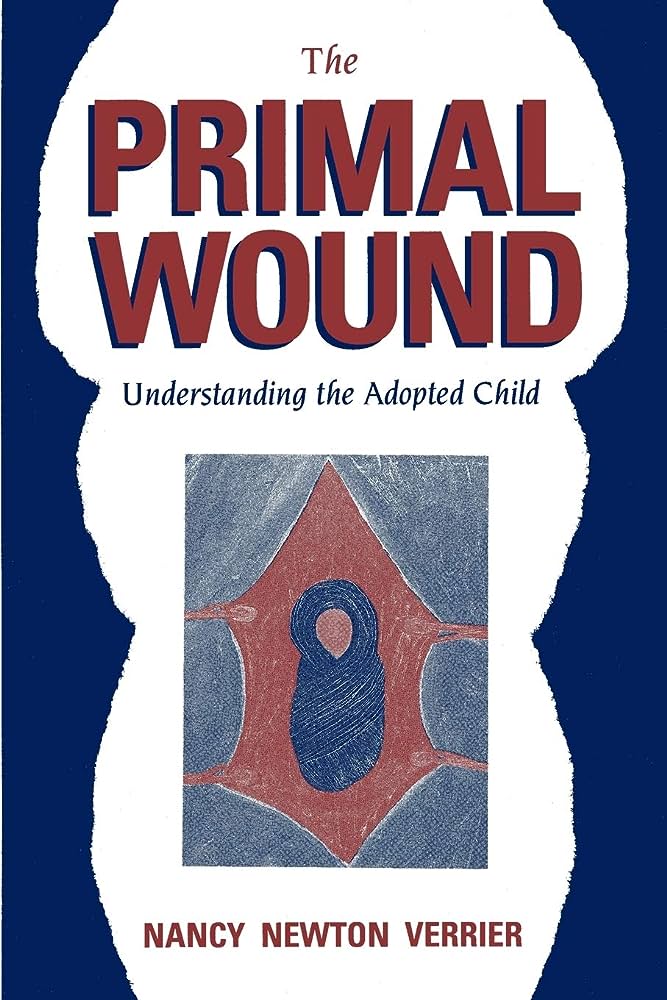
First of all, I want to thank all of you who have written over the years in response to my first book The Primal Wound. Because of the volume of letters and e-mails, I have been unable to answer all of them and hope that you understand. Your letters, cards, and e-mail messages have encouraged me to continue my work and I have published another book: Coming Home to Self.
Part I of Coming Home to Self more fully and scientifically explains the consequences of trauma and the deeply imprinted influence it has on the neurological system as an adopted person goes through life. Part II, which is the part I encourage most adoptees to begin with, is about awareness, authenticity, accountability, and some of the misinterpretations adoptees make to ordinary, everyday events and interactions in life. Because adoptees have been coping with separation trauma all their lives, they are usually unaware, not only that these coping skills are not really who they are, but of the ways in which these coping mechanisms are hindering their relationships and life choices. It is my hope that the messages in this book will make adoptees and others in the adoption triad more aware and able to respond differently to others so as to improve relationships and reunions. Part III is a hodge-podge of information for all parts of the triad as well as for professionals.
A word about e-mails: In order not to be deleted as SPAM, please put something in the SUBJECT line that lets me know what you are writing about. Many of my e-mail messages are from people I don’t know, so I depend on the subject line to let me know whether to read the message or delete it before opening it. Please don’t send me forwarded messages unless they are really important. Send attachments only if they pertain to your message. Sometimes I read my messages but don’t have time to answer them at the time. Then later I have forgotten which ones I answered and which I haven’t. If I haven’t answered your message within a week, please let me know. And…take note of my Schedule of Events to know when I will be away and unable to answer phone or e-mail messages. Sometimes I get letters from people which I fully intend to answer. In order to get a quicker response from me, please include your e-mail address in your letter.
One thing which has been brought to my attention, when talking to adoptees and birth parents about reunions, is the issue of cut-off. Cut-off is when one person initiates a search, then when they have all the information they want (or if they have issues with the person they have found), they cut off the other person. This happens with both adoptees and birth mothers. My opinion on this is that if you are not ready to “hang in there” with the person you wish to find, you are not ready to search. It is not fair to open up the emotions and hopes of the person found, the drop them. Think about this before beginning your search. If you have issues or feel afraid, there are people who can mediate your reunion. If there is no one in your area who can help, I do mediations by phone (see SERVICES).